

Automated CAD Analysis

Converts CAD models into graph structures to automate complex FEA (Finite Element Analysis) and CAE simulation processes.
This reduces analysis time from weeks to minutes, enabling performance prediction from early design stages and dramatically reducing development costs and timelines.

PRINCIPLES

Methods for Converting CAD to Graphs

GNN was designed to efficiently process 3D CAD models (Mesh or B-Rep) with irregular structures, unlike the regular pixel structure of images.
  1. Node & Edge Definition

    Define CAD model elements (e.g., mesh vertices, B-Rep faces/edges) as nodes and represent connection relationships between elements as edges to create graphs.
  2. Message Passing

    GNN iteratively exchanges feature information of each node with neighbor node information to update node feature vectors. Through this process, the model deeply learns complex shapes and relationships between elements (topological information).
  3. Rotation Invariance

    GNN-based approaches use unique descriptors unaffected by 3D model rotation or translation, enabling consistent and accurate analysis of CAD models in various poses.

FEATURES

Key Features of Simvis Automated CAD Analysis Solution

  1. High-Speed Analysis Surrogate Model

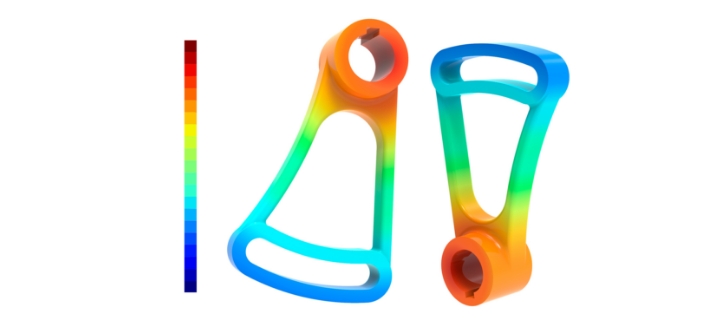
    Through GNN-trained surrogate models, predict analysis results such as stress, deformation, and flow fields in near real-time, dramatically reducing computational costs in design optimization processes.

    Accuracy :
    High-Precision Prediction (Over 90% vs FEA results)
    Speed :
    Hundreds of times faster than traditional FEA
    Application :
    Design Iteration & Multi-Simulation
  2. Automatic Feature Recognition

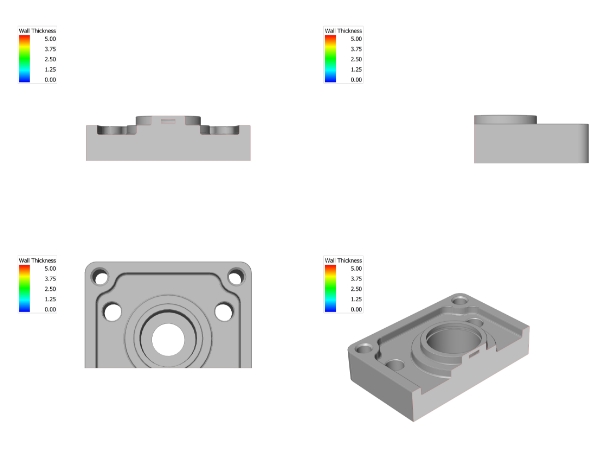
    Analyzes CAD models to automatically recognize and label key geometric features required for FE analysis such as bosses, ribs, and holes. This minimizes manual work by analysis experts.

    Automation Target :
    FEA Features (Reinforcements, Joints, etc.)
    Precision :
    Robust to Rotation Invariance
    Effect :
    Reduced Pre-Processing Time
  3. Mesh Quality Optimization

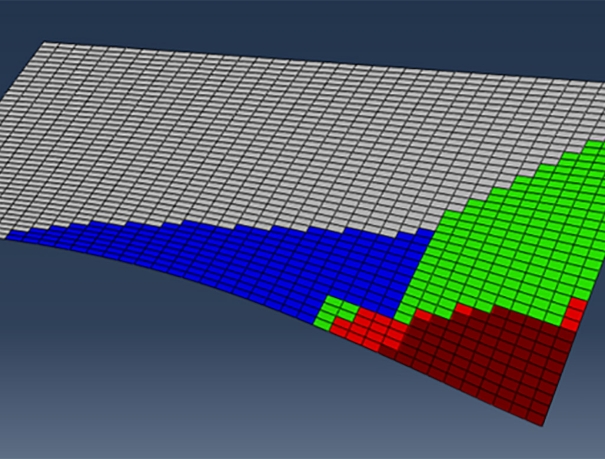
    Dynamically adjusts mesh element size and resolution according to analysis goals, preserving important geometric features while improving computational efficiency. Automatically derives optimal mesh quality to enhance prediction accuracy.

    Goal :
    Balance Computation & Accuracy
    Method :
    Bayesian Optimization-Based
    Effect :
    Maximize Memory Efficiency & Accuracy

PROS & CONS

Advantages & Considerations

Speed & Cost
Advantages
Maximize design verification iterations with prediction speeds tens to hundreds of times faster than traditional CAE analysis
Considerations
Large-scale, high-quality dataset construction required for initial model training
Accuracy
Advantages
Maintains high accuracy by learning complex shapes and topological relationships, with rotation/translation invariant analysis
Considerations
As a predictive model, minor differences from 100% traditional FEA results may occur
Flexibility
Advantages
Flexibly processes various 3D data structures including Mesh-based and B-Rep
Considerations
More complex structure than general neural network models, requiring high-level AI/CAE expertise
Expertise
Advantages
Reduces workload by automating manual mesh work and feature recognition stages by analysis experts
Considerations
Standardization for GNN algorithms and structures is still lacking, requiring high need for custom design

WORKFLOW

GNN-Based CAD Analysis Automation Workflow

GNN-based automated CAD analysis is performed through the process of 'CAD → Graph Conversion → GNN Training/Prediction → Analysis Result Derivation'.
  • CAD
  • Graph Conversion
  • GNN Training/Prediction
  • Analysis Result Derivation

APPLICATIONS

Key Application Areas

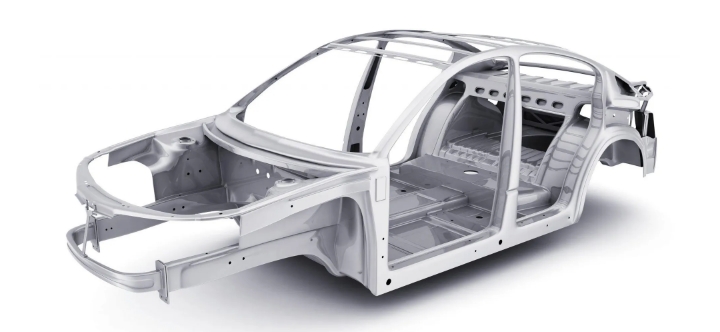
  1. Automotive/Aerospace Component Structural Optimization

    Perform high-speed lightweight and stiffness prediction simulations using GNN surrogate models to shorten component design improvement cycles.

  2. New Material/Composite Property Prediction

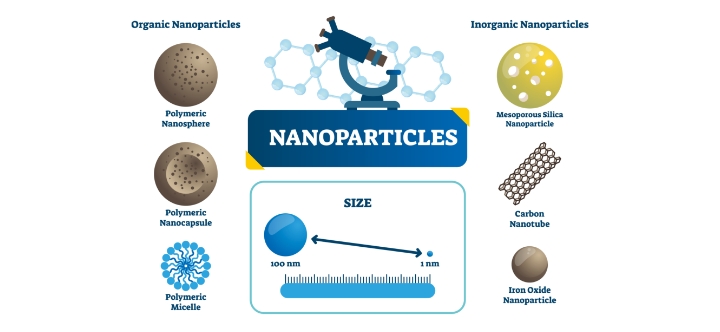
    Represent material microstructures as graphs and apply GNN to predict thermodynamic properties and mechanical strength of new materials without experiments.

  3. Mold & Casting Process Defect Prediction

    Learn complex process (e.g., casting/welding) simulation data to predict potential defect locations and types in products at the design stage.

  4. Multi-Physics Analysis Integration

    Integrate analysis of interactions (Coupling) between different physical phenomena such as structural, thermal, and fluid using GNN-based approach to accurately understand system-level performance.